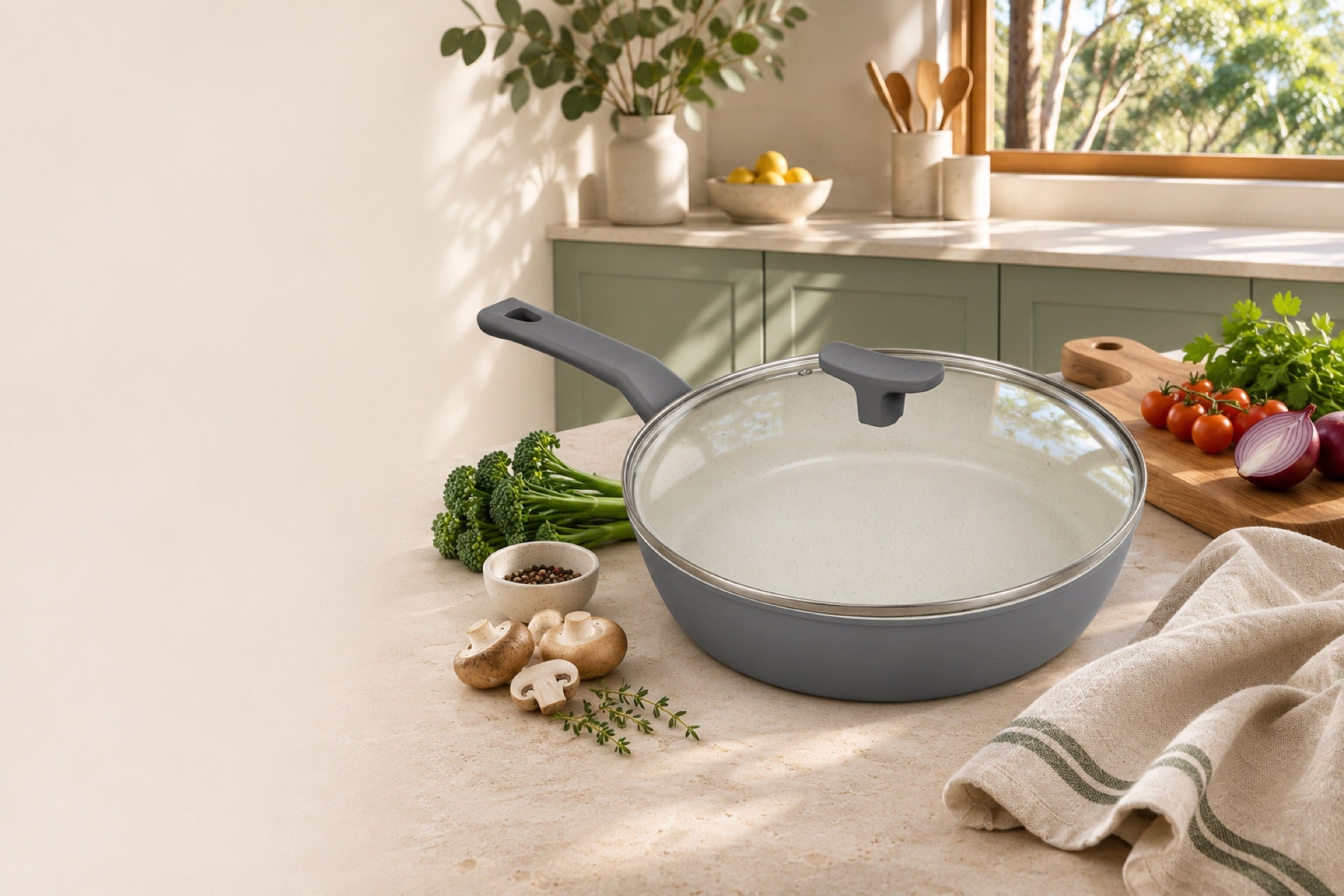
Choose a pan around the meals you cook and the way you move it. A shallow coated frypan leaves room to slide a turner under an egg. A deeper lidded sauté pan holds the sauce for a one-pan dinner. An iron pan suits a batch of vegetables that needs steady heat, provided you can comfortably lift it when full.
Choose the surface for your usual meal
- Non-stick for eggs and delicate fish. Use the maker’s heat settings and permitted utensils. Keep empty heating brief and follow the instructions for adding oil or food. If release gets worse, clean off residue with the recommended method and inspect for lifting or peeling before the next use.
- Stainless steel for a pan sauce. Choose a base that sits flat. Heat gradually as directed, brown the food in batches that fit without crowding, then loosen the browned bits with recipe liquid. Let the pan cool before soaking or washing.
- Bare cast iron or carbon steel for searing. Check the loaded weight, grip and lifting route before cooking. Dry thoroughly after washing and maintain the seasoning as directed. Follow the separate instructions for an enamelled finish.
- Glass and ceramic for approved uses. Check the actual vessel’s oven and cooktop instructions. Place hot bakeware on a dry heatproof trivet and keep cold water away from hot glass.
Match the base, handle and lid separately
The Clevinger 28 cm non-stick frypan has a listed 20 cm induction base. Compare that contact area with your cooktop’s minimum pan size and measure the handle clearance beside any neighbouring pan. Confirm the oven or grill limits for the body, handle and lid separately before an oven finish.
Plan for hot metal and steam
Set out dry oven mitts and a stable trivet before heating. Treat exposed handle fittings, helper handles and metal lid knobs as hot even when the main grip has a different finish. Turn handles inward, clear of neighbouring burners. When checking a covered dish, tip the lid so steam vents away from your face and hands. Keep the mitts away from the burner between uses. WorkSafe ACT burn prevention and Fire and Rescue NSW cooking safety.
Browse cooking and baking equipment, or compare the dimensions that matter for kitchen tools and day-to-day cookware care.